Perimeter
0 km
In five years UAVs have moved from a tactical nuisance to the primary threat against critical infrastructure. Classical air defence was not designed for them.
Tactical segment — platforms at $300–1,500, range 5–15 km. Munition drops, kinetic self-guidance, swarming.
Commercial-grade — DJI Mavic, Autel, Anafi. Position reconnaissance, target lock, data relay.
Long-range — Shahed-class, 500–2,000 km. Inertial navigation, loiter cruise, infrastructure strikes.
Radar, RF intelligence, electronic warfare, interceptor drones, unified software, a command post, operator training and 24/7 support — all wired together, tuned to a specific site. The customer receives working defence, not a catalogue of devices.
Each layer neutralises part of the threat on its own. Together they form a kill chain without blind spots — from detection to engagement.
Find the drone early. Radar and radio sensors spot it 20–40 km away, long before it reaches the target.
Identify it. Read its signals to tell the drone type and how it is being controlled.
Block it. Electronic jamming (EW) cuts the drone's control, navigation and video links so it cannot be flown.
Destroy it. Interceptor drones physically take down anything that ignores the jamming.
All layers, one operational loop — common picture, automatic target hand-off, engagement authorisation from a single workstation.
A contact crosses the detect line, is classified by recon, jammed at the inner ring, and intercepted before it reaches the asset — a kill chain without blind spots.
Automatic where rules allow; operator-authorised at the kinetic threshold. Hand-off between layers is invisible to the threat — and to the operator.
An integrated complex bundles sensing, jamming, kinetic action and networking at a single point. Dozens of complexes stitch into a perimeter.
RX-Perimeter radar (detection), DT-1 detector (RF intelligence, 300–6,500 MHz), EO/IR for visual identification.
Directional (AX) plus omnidirectional (DR) emitters. 100–6,000 MHz, up to 12 channels per node.
TI-50 interceptor wing — 50 drones with a ground control station. Against EW-resistant targets.
Redundant comms (fibre / RF / satellite), hybrid power with solar backup for autonomous operation.
Local compute loop: sensor fusion, false-target filtering, authorisation to jam and intercept.
Sensing, jamming, kinetic action and networking fused at a single point — the repeatable building block of the perimeter.
Every product is built as a system module: shared interfaces, shared software, shared maintenance logic. Swap, scale, combine.
You don't need to read the specifications. The point is simple — one complete, modular product line, all built to the same system standard. The detailed figures below are there for your technical team.
| Code | Type | Family | Channels | Range | Platform |
|---|---|---|---|---|---|
| AX-2 / 5 / 7 | Directional EW, stationary | AX · Directional | 2 / 5 / 7 | up to 5 km | Tripod · mast |
| DR-1 / M / 3 | Omnidirectional EW, dome | DR · Omni-dome | up to 8 / 8 / 12 | 1.5–3 km | Vehicle · roof · mast |
| HX-5 / P / 3 | Portable RF jammer | HX · Handheld | 5 / 5 / 3 | 0.5–1.5 km | Backpack · rifle · tripod |
| CX-M | Multi-channel combined complex | CX · Combined | up to 30 emitters | 3–5 km | Fixed · rooftop |
| SX-8 | Auto-tracking, remote system | SX · Sentry | up to 8 | 5–8 km | Pan-tilt mast |
| MX-12 | Mobile platform on trailer | MX · Mobile | up to 12 | up to 10 km | Trailer · container |
| DT-1 | RF detector / SIGINT | DT · Detector | 300–6,500 MHz | up to 1 km | Vehicle · mast |
| RX-PER | Air-target detection radar | RX · Radar | X / Ka-band | 20–40 km | Mast · truss |
| TI-50 | Interceptor drone wing | TI · Interceptor | 50 craft + GCS | 15 km / 20 min | Container |
| FALAK COMMAND | Software: fusion, C2, analytics | SW · Software | — | — | Server · workstations |
Software is what turns devices into a system. FALAK COMMAND — the command-and-control (C2) software — fuses every radar, RF sensor and effector into one real-time picture: detect → classify → authorise → jam → intercept — all from one workstation.
Radar, RF intelligence, EO/IR and data from adjacent nodes merge into a single track. False targets filtered, real ones classified automatically.
Targets from the radar are routed to the nearest EW node or to the TI-50 wing — without operator intervention.
Rules of engagement live in the system. The operator confirms — they don't compute coordinates or frequencies by hand.
Role-based access, encrypted links, fully on-prem operation — no dependency on cloud or external servers.
 FALAK-CMD · hardened console · web & multi-user
Automatic engagement-inhibit inside no-fly areas.
Record, replay & export every engagement to video.
Rehearse intercepts; train & validate readiness.
Real-time feedback from every effector.
Every module has been through a real combat cycle. This is not a lab solution adapted for defence — it is defence proven under fire.
Electronic warfare and radio suppression — a team of engineers, operators, radar and integration specialists.
In the specified frequency bands, across field testing and confirmed operational use.
In-house electronics, firmware and antenna feeds — independence from adversary-controlled supply chains.
A daily contest against UAV evolution — new frequencies, new protocols, new tactics. The product line moves at the speed of the threat.
Desert, urban, coastal — three RF propagation regimes and three risk profiles. Each configuration is dialled in per site after survey.
Operator courses, joint exercises, a 24/7 technical line, warranty and upgrade programmes — part of the contract, not an add-on.
Basic course (5 days) + advanced course (10 days) + certification. FALAK COMMAND simulators plus field drills.
Our instructors deploy into the field with your unit — doctrine transfer, not just hardware.
Helpdesk, remote diagnostics over a secure channel, on-site teams. Guaranteed SLA on critical failures.
Regular updates for new frequencies, protocols and tactics. The customer always runs the latest threat library.
Regional spares depot, technology transfer to local contractors via offset programmes.
The system is modular: start with one refinery or port, grow to a city perimeter, then to a coastal line. Numbers below are illustrative; final configuration is fixed after engineering survey.
A critical point: a single refinery, terminal, command post, VIP residence or storage site.
An agglomeration: refinery group, port infrastructure with approaches, central districts, airport.
An integrated shield 200+ km long: coastline, energy infrastructure, transport corridors, national borders.
Illustrative scaling examples. Actual parameters are fixed after site survey, terrain analysis, threat assessment and density validation.
A worked example of the L-scale regional shield: ~100 complexes spaced ~2 km along the coast, four priority sectors, one command picture — every threat intercepted before the asset.
Capability grows every 30 days. The first pilot sector goes on combat duty on day 30; full readiness at 360 days.
Mobilisation and team standup; site survey and geo-planning; FALAK COMMAND post stood up; pilot sector enters combat duty.
Active software integration between nodes; priority arc covered; first operator cohort graduates; 24/7 helpdesk in beta.
~20% of complexes installed; inter-sector target hand-off rehearsed; service and repair team activated; SOPs locked.
100% installed; the integrated architecture operates as one; acceptance trials complete; hand-over to standard 24/7 support.
One Purchase Order. Five stages. Stage payments tied to accepted deliverables — no hidden costs, all parameters confirmed after engineering survey.
falakdefence@proton.me · falak-defence.com
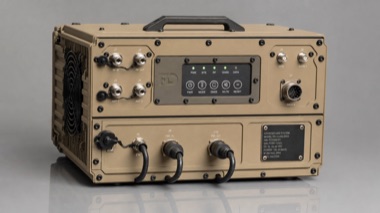
Product imagery in this document is AI-generated and stylised for operational security. Actual hardware appearance and full technical specifications are disclosed under NDA.